
Description
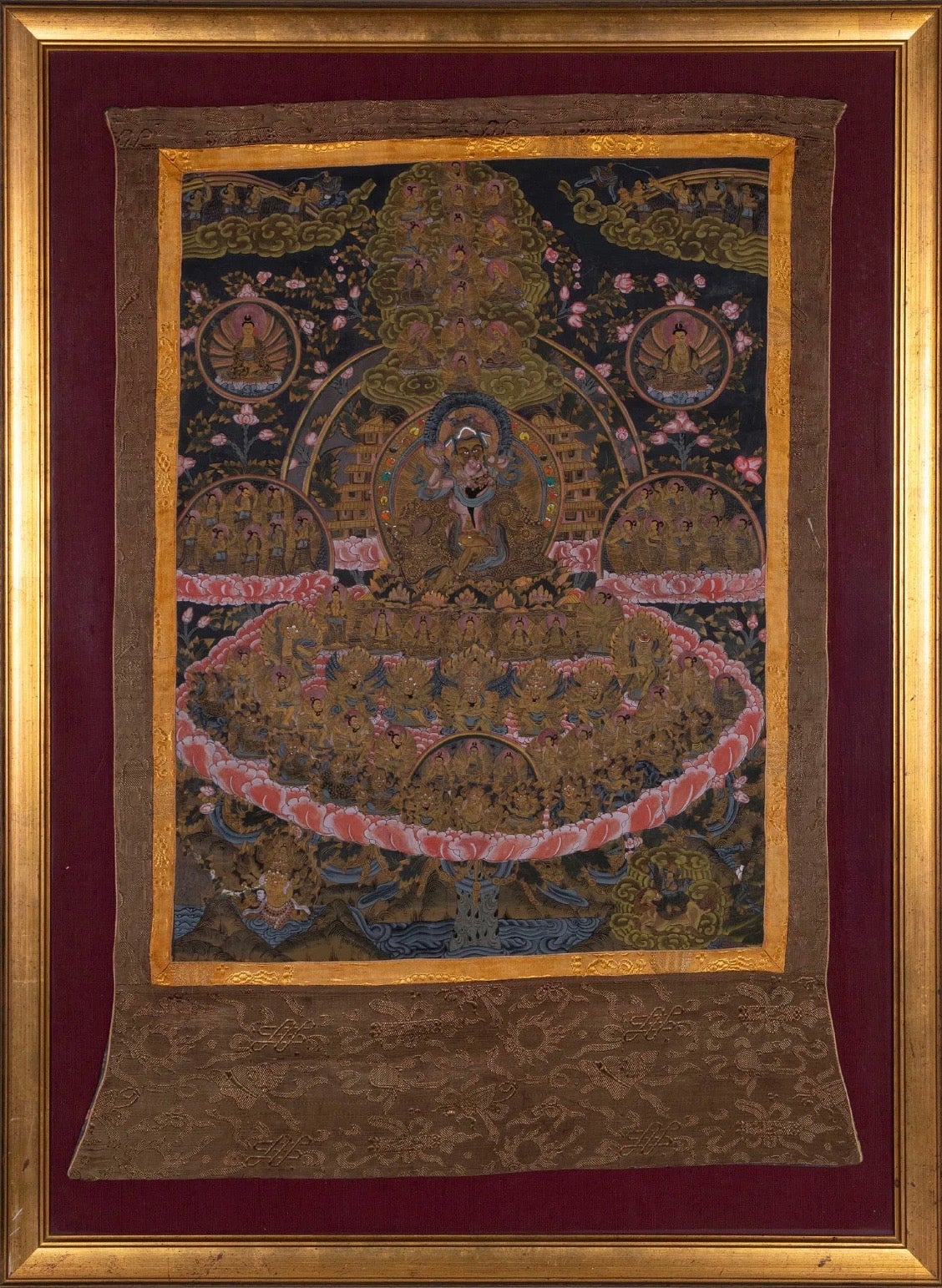
Hand painted and embroidered silk, 38 x 28”, frame 45 ½ x 33 ½” with glass.
This is a traditional Tibetan Buddhist Thangka (also spelled thangka or tanka), specifically a “nakthang” style painting (gold-on-black or dark-ground technique).
Key Features and Identification
• Central Deity: The prominent multi-armed, wrathful (fierce) figure in the center, often with a dynamic pose, skull ornaments, and surrounded by a halo or mandorla, is characteristic of wrathful protector deities in Vajrayana (Tantric) Buddhism. Common candidates include forms of Mahakala (especially Panjaranatha Mahakala, a major protector), Vajrakilaya, or similar yidams/guardians. These figures appear terrifying to symbolize the fierce compassion that destroys ignorance, obstacles, and negative forces. 
• Composition: It features a highly symmetrical, mandala-like structure with layered circular arrangements of smaller deities/Buddhas around the center, upper registers with peaceful Buddhas (often in meditation on lotuses amid clouds), and lower registers with additional wrathful protectors or offerings. Pink lotus motifs, stylized clouds, mountains/landscape at the base, and architectural elements (like temples/pavilions) are all classic Thangka iconography.
• Style: The dark background with extensive gold detailing is typical of nakthang paintings, used especially for wrathful subjects to evoke mystery, power, and enlightenment emerging from darkness.
Exact identification of the central deity would benefit from higher-resolution details (e.g., number of arms, specific implements held, consort if in yab-yum pose, or inscriptions), but the overall layout strongly suggests a protector deity Thangka, possibly centered on Mahakala or a related figure in a full assembly/mandala context.
Cultural and Religious Context
Thangkas are portable scroll paintings used in Tibetan, Bhutanese, Mongolian, and Himalayan Buddhist traditions for meditation, teaching, ritual, and devotion. They serve as:
• Visual aids for visualizing deities during tantric practices.
• Objects of veneration that embody the deity’s presence when consecrated.
• Encyclopedic tools encoding complex cosmology, lineages, and symbolism (e.g., lotuses for purity, clouds for auspiciousness, wrath for transformative power).
This one appears elaborate and high-quality, likely from a monastic or commissioned context, possibly 18th–19th century